
Neighborhood Report
Capitol Hill, Washington, District of Columbia
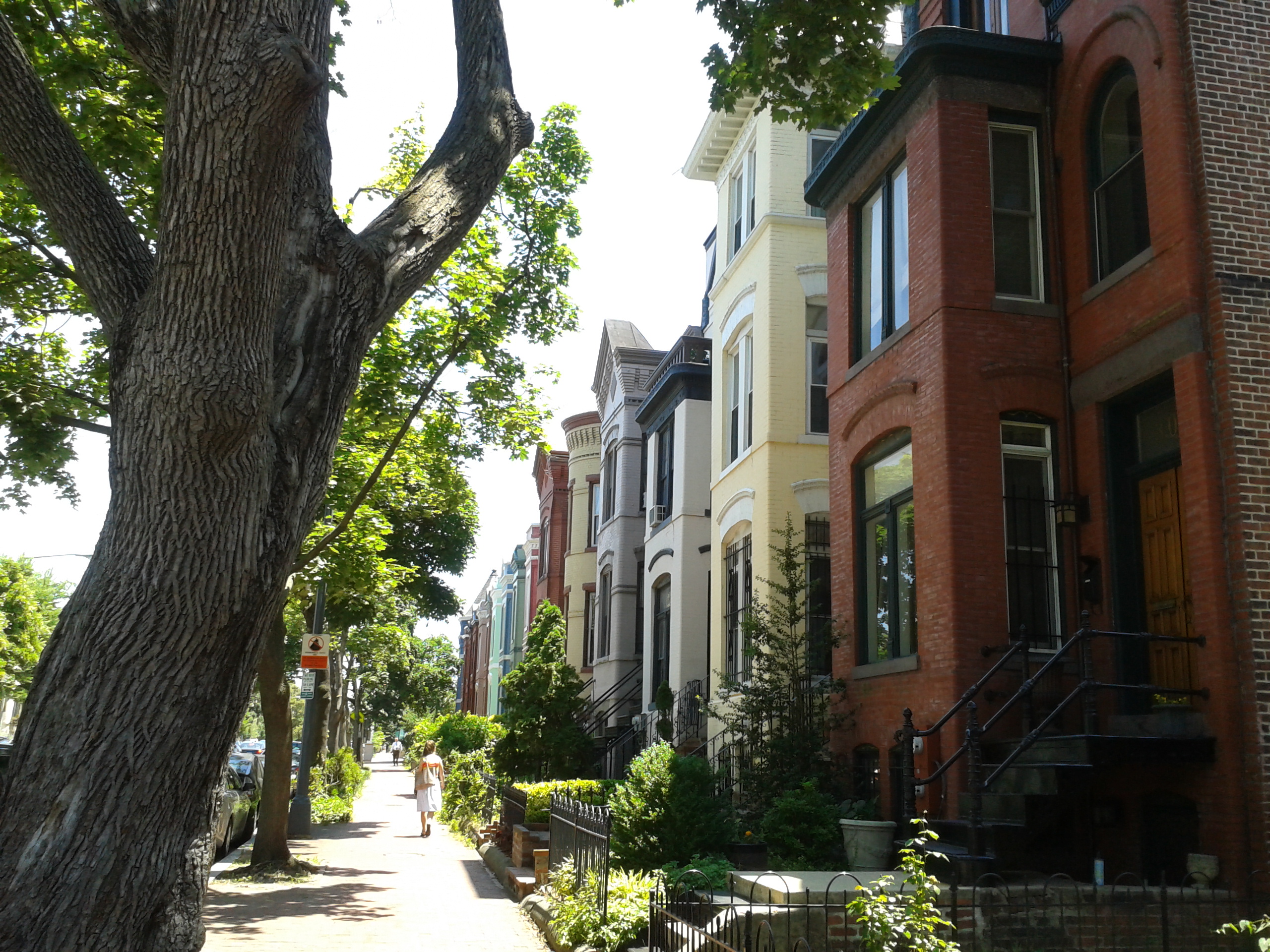
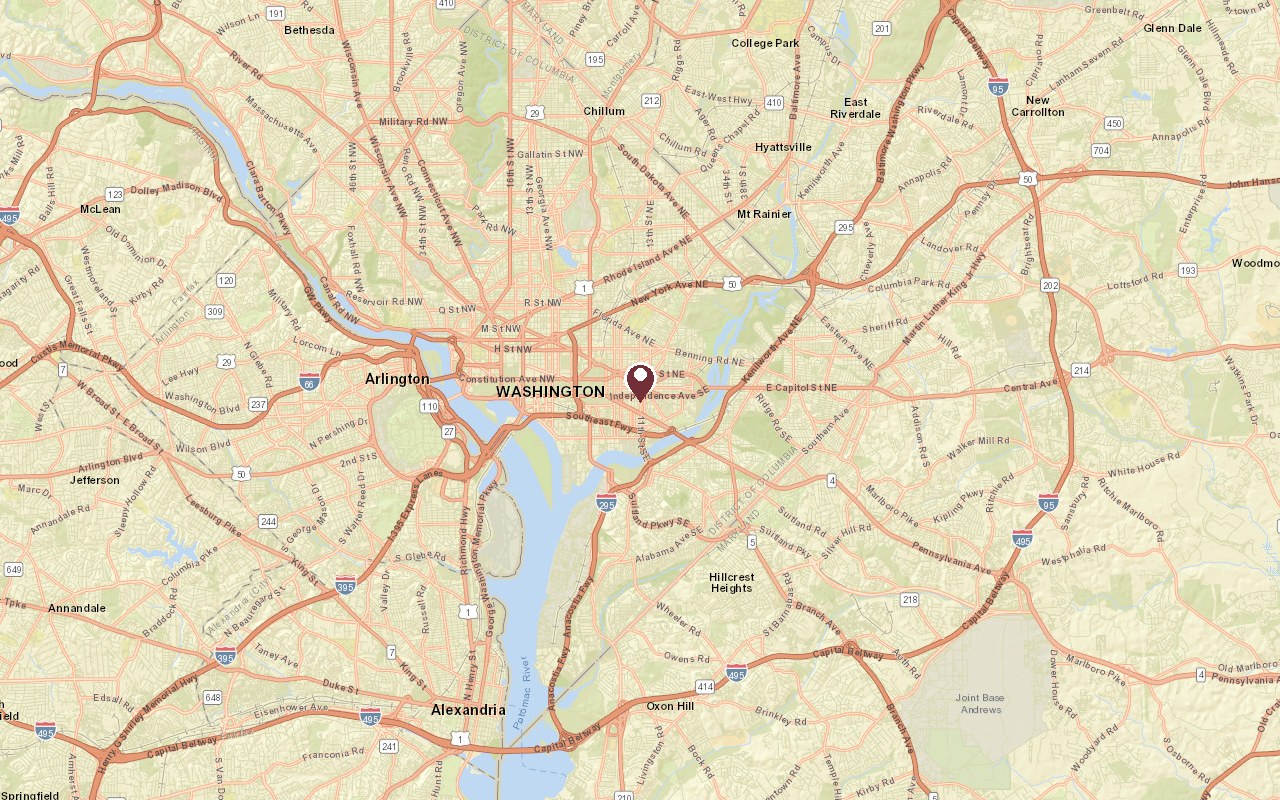
Capitol Hill is Washington's residential answer to the federal city: 19th-century rowhouses on streets that end at the Capitol dome, Eastern Market as the neighborhood's living room since 1873, and three Metro lines within walking distance, two miles from the White House.
The short version
Capitol Hill, Washington, DC
Capitol Hill is Washington's residential answer to the federal city: 19th-century rowhouses on streets that end at the Capitol dome, Eastern Market as the neighborhood's living room since 1873, and three Metro lines within walking distance, two miles from the White House.

At a Glance
District of Columbia cost notes. The District levies a graduated income tax from 4 percent to 10.75 percent, with the top rate above $1 million, and taxes capital gains as ordinary income. Social Security is fully exempt, while pensions and 401(k) and IRA distributions are taxable, with a $3,000 retirement deduction at age 62 and older. Property tax runs $0.85 per $100 of assessed value on the first $2.558 million, with a $91,950 homestead deduction for owner-occupants, for an effective rate near 0.60 percent, low by national standards. The general sales tax is 6 percent, held through September 30, 2027, with restaurant meals at 10 percent.
The Story
Capitol Hill began as an idea before it was a neighborhood. Under the Residence Act of 1790, President Washington chose the capital's site in 1791, and French engineer Pierre Charles L'Enfant placed the "Congress House" on high ground at the east end of his plan, a rise he called Jenkins Hill, "a pedestal waiting for a monument." Washington laid the Capitol cornerstone on September 18, 1793, and Congress first met in the unfinished building on November 17, 1800. Thomas Jefferson is credited with naming the hill Capitol Hill in 1793, after Rome's Capitoline Hill, though the connection is not fully documented, and who Jenkins was is unclear.
See moreSee less
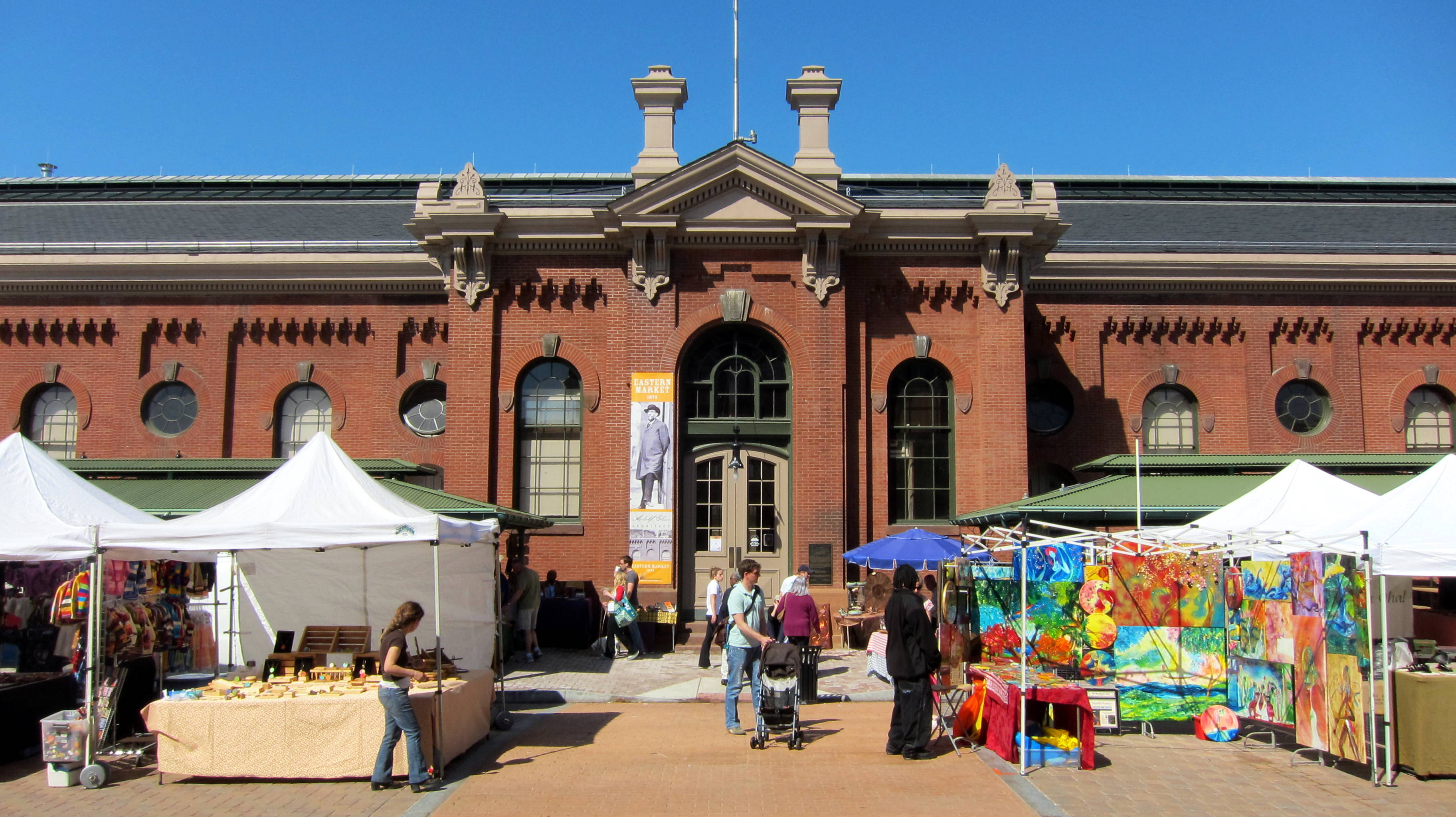
The neighborhood grew around two employers: the Washington Navy Yard, established on October 2, 1799, on the Anacostia River, and the Marine Barracks, sited by Jefferson in 1801. Few early congressmen wanted to live permanently in the new city, so boarding houses filled the streets near the Capitol, and by 1801 most lived on the Hill. British troops burned the Capitol on August 24, 1814, but it was rebuilt. After the Civil War, freed Black Washingtonians settled in the Hill's alleys; by 1897, 73 percent of the city's alley dwellers were Black. Eastern Market, designed by Adolf Cluss, opened on November 12, 1873.
The twentieth century tested the Hill. After World War II the Navy Yard shrank from tens of thousands of workers to a few thousand, families left for the suburbs, and rowhouses were cut into apartments. In April 1968, after the assassination of Martin Luther King Jr., unrest burned more than 1,000 buildings across Washington, including 103 businesses along H Street NE, and federal troops mounted machine guns on the Capitol steps. But restoration was already underway: the Capitol Hill Restoration Society, founded in 1955, began by saving the Alva Belmont House and campaigned until the district of about 8,000 contributing buildings was listed on the National Register on August 27, 1976. The Eastern Market Metro station opened July 1, 1977.
The human beat is the morning after the Eastern Market fire: on April 30, 2007, a three-alarm fire gutted the market's South Hall. The next day Mayor Adrian Fenty pledged to rebuild it, and the vendors refused to wait: Market Lunch owner Tom Glasgow salvaged his pancake griddle from the wreckage and reopened in the temporary East Hall that September. Barbara Ashby, a weekly Market Lunch regular for two decades, said she came over and cried when it burned. Neighbors gave almost $500,000 to the Capitol Hill Community Foundation's Eastern Market Fund, and on June 26, 2009, every original vendor returned to the restored hall. That is the modern Hill: residents who treat old buildings as something they own together.

Timeline
- 1790: Congress passes the Residence Act, authorizing a permanent national capital on the Potomac.
- 1791: Pierre Charles L'Enfant is appointed to plan the federal city; he places the "Congress House" on Jenkins Hill, calling it "a pedestal waiting for a monument."
- September 18, 1793: President George Washington lays the Capitol cornerstone.
- 1793: Thomas Jefferson is credited with naming the rise Capitol Hill, after Rome's Capitoline Hill (connection not fully documented).
- October 2, 1799: The Washington Navy Yard is established on the Anacostia River.
- November 17, 1800: Congress holds its first session in the unfinished Capitol.
- 1801: President Jefferson selects the site of the Marine Barracks, within marching distance of the Capitol and the White House; by 1801 most congressmen live in Capitol Hill boarding houses.
- 1806 to 1807: Christ Church is built to serve the early Navy Yard community.
- August 24, 1814: British troops burn the Capitol during the War of 1812.
- 1838: Little Ebenezer Church is built by Capitol Hill's earliest African American congregation.
- 1866: The Old Naval Hospital is built, one of the few Capitol Hill structures dating to the Civil War period.
- November 12, 1873: Eastern Market, designed by Adolf Cluss, opens at 225 7th Street SE.
- 1876: The Emancipation Memorial is erected in Lincoln Park.
- July 22, 1892: Congress restricts new alley dwellings, requiring alleys at least 30 feet wide with sewerage, water, and light.
- 1897: The Library of Congress Thomas Jefferson Building opens; the Library leaves the Capitol.
- 1907: Union Station opens.
- 1908: Eastern Market is expanded with Center and North Halls designed by Snowden Ashford; the Cannon House Office Building opens.
- 1935: The Supreme Court Building is completed.
- 1955: The Capitol Hill Restoration Society is founded to protect the neighborhood's historic fabric.
- April 4 to 8, 1968: After the assassination of Martin Luther King Jr., unrest burns more than 1,000 buildings in Washington, including 103 businesses on H Street NE; federal troops are posted on the Capitol steps.
- June 19, 1973: The Capitol Hill Historic District is entered in the DC Inventory of Historic Places.
- August 27, 1976: The Capitol Hill Historic District is listed on the National Register of Historic Places.
- July 1, 1977: Eastern Market Metro station opens; the Capitol Hill Restoration Society had lobbied for the Eastern Market name over Marine Barracks.
- April 30, 2007: A three-alarm fire badly damages Eastern Market's South Hall.
- June 26, 2009: Eastern Market reopens after restoration, with all original vendors returning to their pre-fire locations.
- October 21, 2015: The National Register boundary increase adds the Swampoodle neighborhood to the Capitol Hill Historic District.
What It Actually Feels Like
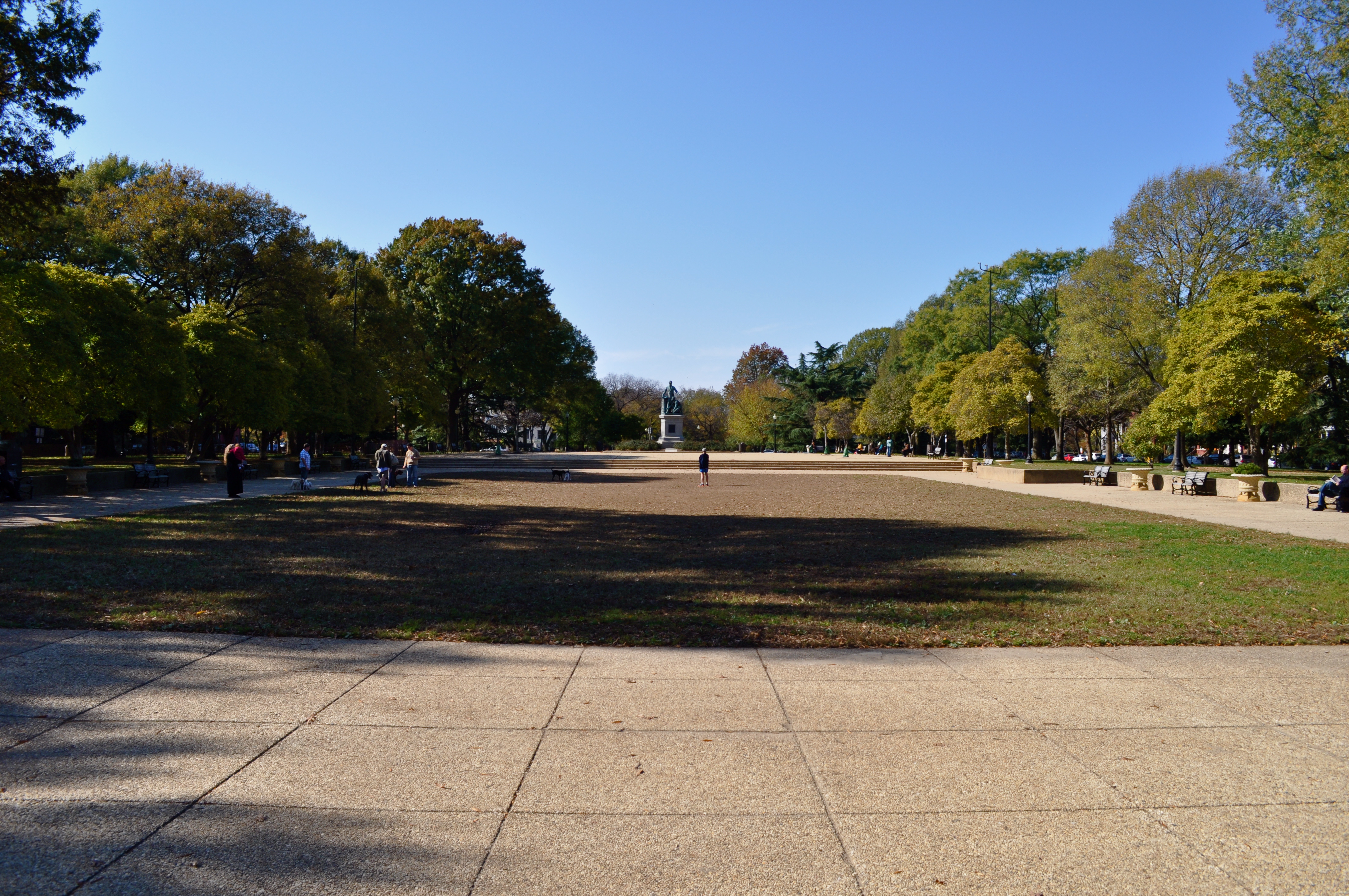
Capitol Hill feels like a small town that happens to sit beside the Capitol. Weekends start at Eastern Market, with the farmers market outside and the butchers and bakers inside the 1873 hall; weekdays run on coffee, dog walks, and staffers heading for the Hill. East Capitol Street runs straight to the dome, so the building that defines the neighborhood is also its compass. Pennsylvania Avenue SE and Barracks Row carry the restaurants and bars, and Lincoln Park gives the residential blocks a green in the middle. The tradeoff is the one the whole report keeps returning to: the rowhouses with the most character are also the most expensive, the condos that make the neighborhood reachable are the bulk of what sells at the lower end, and the eastern blocks feel a world away from the Capitol end, quieter and further from the Metro.

Pros and Cons
Pros
- Walk Score 88, Transit Score 78, Bike Score 92 (Walk Score, November 7, 2026).
- Downtown Washington is 2 miles away, 3 minutes by taxi and 23 minutes by Metro (Rome2Rio, November 7, 2026), served by the Blue, Orange, and Silver lines at Capitol South and Eastern Market.
- Eastern Market has run as the neighborhood's market hall since 1873, rebuilt by its own vendors after the 2007 fire.
- The stock is genuinely historic: the Capitol Hill Historic District holds about 8,000 contributing buildings, listed on the National Register August 27, 1976.
Cons
- The price is the barrier: a median sale price of $907,246 for the three months ending September 2026 (Redfin), against a District-wide median of $681,000 (Redfin, 12 months ending September 2026), and houses alone median $1,135,000 on 323 sales in the latest Bright MLS year.
- Rowhouses mean stairs, small lots, and limited parking, and the most desirable blocks near the Capitol carry the highest prices.
- The commute stretches across the neighborhood: the Library of Congress end reaches downtown in 23 minutes by Metro, while the Eastern Market end adds roughly 10 to 15 minutes.
Housing in Detail
Entry: the K Street condo, a 1 bed, 1 bath condo at 1367 K St SE Unit B, 529 square feet, shown at $200,000 on November 7, 2026, listing updated November 2, 2026, built 1946. Lower-mid: the 4th Street townhome, a 2 bed, 1 bath townhome at 519 4th St SE, 1,081 square feet, listed at $700,000 on November 7, 2026, 2 days on Redfin, built 1880. Upper-mid: the 8th Street townhome, a 3 bed, 1.5 bath townhome at 332 8th St SE, 1,751 square feet, listed at $1,250,000 on November 7, 2026, 6 days on Redfin, built 1800. Top: the E Street townhome, a 4 bed, 4.5 bath townhome at 639 E St SE, 4,500 square feet, shown at $3,895,000 on November 7, 2026, listing updated October 20, 2026, built 1890. The entry condo was listed at $245,000 in August 2025, removed in July 2026, and returned at $200,000. The shape underneath: 12,845 housing units (Point2Homes, Census American Community Survey 2019 to 2023), 37.5 percent owner-occupied and 62.5 percent renter-occupied, in a neighborhood where rowhouses set the look and condos and apartments set the range of ways in. The verified market on November 7, 2026 ran from a $200,000 condo to a $3,895,000 townhome, and the gap between those two numbers is the neighborhood in miniature.
Daily Life
Eastern Market does the weekend work: the farmers market on Saturday, the flea market on Sunday, and the butchers, bakers, and cheese merchants inside the hall all week. Barracks Row on 8th Street SE and Pennsylvania Avenue SE carry the restaurants, bars, and everyday shops, and the Marine Barracks at 8th and I gives the neighborhood its Friday evening parade in season. Lincoln Park, Stanton Park, and the Capitol grounds give the residential blocks their greens, and the Capitol South, Eastern Market, and Potomac Avenue stations keep downtown within a short ride.
Best For / Think Twice If
Best for: buyers who want a market hall and a historic district as daily amenities, walkable shopping streets, and a short ride downtown; condo and co-op buyers who want a Capitol Hill address at the lower end of the range; and people who work on the Hill or downtown and want the commute to disappear.
Think twice if: the $907,246 median strains the plan, because the verified market on November 7, 2026 ran from a $200,000 condo to a $3,895,000 townhome; you need a detached house or a yard, because detached single-family homes are 2.4 percent of the stock; parking matters, because rowhouses come with limited off-street parking; or a car-free life needs a careful address check, because the eastern blocks sit further from the Metro than the Capitol end.
Top Properties Right Now
$200,000
1367 K St SE Unit B, Washington, DC 20003
Condo, built 1946, 1 bed, 1 bath, 529 square feet
The entry card, a condo in the eastern part of the neighborhood, listing updated November 2, 2026, and still shown For Sale on November 7, 2026. It was listed at $245,000 in August 2025, removed in July 2026, and returned at $200,000.
Listing verified on Redfin, November 7, 2026. View on Redfin
$700,000
519 4th St SE, Washington, DC 20003
Townhome, built 1880, 2 bed, 1 bath, 1,081 square feet
The lower-mid card, a townhome a few blocks east of the Capitol, 2 days on Redfin, listed November 4, 2026.
Listing verified on Redfin, November 7, 2026. View on Redfin
$1,250,000
332 8th St SE, Washington, DC 20003
Townhome, built 1800, 3 bed, 1.5 bath, 1,751 square feet
The upper-mid card, a townhome on Barracks Row, 6 days on Redfin, listed October 31, 2026.
Listing verified on Redfin, November 7, 2026. View on Redfin
$3,895,000
639 E St SE, Washington, DC 20003
Townhome, built 1890, 4 bed, 4.5 bath, 4,500 square feet
The top card, a large townhome a few blocks east of the Capitol, near Eastern Market, listing updated October 20, 2026, and still shown For Sale on November 7, 2026. Redfin's public-record section shows 3 baths and 2,455 finished square feet, against the listing's 4.5 baths and 4,500 square feet.
Listing verified on Redfin, November 7, 2026. View on Redfin
Nearby Alternatives
- Navy Yard: south across the freeway, newer condos by the Anacostia River, for buyers who want the Hill's Metro access in a newer building.
- NoMa: north toward Union Station, newer apartments, for buyers who want a shorter commute at a lower entry point.
- Brookland: northeast, quieter streets near Catholic University, for buyers who want historic character further from the Capitol crowds.
- Dupont Circle: west across downtown, a similar rowhouse feel, for buyers who want the same walkability closer to downtown offices.
Sources
Data as of the dates shown above. Refresh due within 90 days for listings and 6 months for market data.
- Redfin, Capitol Hill neighborhood data, three months ending September 2026, as republished in Patricia A. Smith, Compass, "Capitol Hill Housing Pulse", updated October 20, 2026: median sale price $907,246, up 0.2 percent year over year, $569 per square foot, 144 homes sold in September, 41 median days on market, 99.1 percent sale-to-list: homesincapitolhill.com
- Wardman, "Best Neighborhoods in DC: Prices for 32 Areas", Bright MLS closed sales October 2025 to September 2026: Capitol Hill median $1,000,000 on 433 sales; houses $1,135,000 on 323 sales; condos and co-ops $523,500 on 110 sales: wardman.ai
- Homes.com, Capitol Hill neighborhood prices, November 2026: median home sale price $992,500, up 1 percent year over year: homes.com
- Apartments.com, "5 Best Neighborhoods in Washington, DC, for Renters in 2026", October 2026 data: average one-bedroom rent, Capitol Hill, $2,247 per month, 632 square feet average size; Washington, DC average one-bedroom rent $2,303 per month: apartments.com
- RentCafe, "Average Rent in Capitol Hill, DC", last updated October 30, 2026: average one-bedroom rent $2,802 per month, 717 square feet: rentcafe.com
- Walk Score, Capitol Hill neighborhood page, November 7, 2026: Walk Score 88, Very Walkable; Transit Score 78; Bike Score 92, Biker's Paradise: walkscore.com
- Point2Homes, Capitol Hill demographics, Census American Community Survey 2019 to 2023: 12,845 housing units, 37.5 percent owner-occupied, 62.5 percent renter-occupied, 11.1 percent vacant: point2homes.com
- Rome2Rio, Library of Congress to White House, November 7, 2026: taxi 2 miles, 3 minutes, $9 to $11; subway 23 minutes, $2 to $3; bus 23 minutes, $3; walk 38 minutes: rome2rio.com
- EIN Presswire, "Georgetown Home Prices Rise 5.6% Over the Past Year", October 14, 2026, citing Redfin market data for the City of Washington, DC: citywide median $681,000, 12 months ending September 2026, up 1.7 percent year over year: einpresswire.com
- Tax Foundation, "2026 DC Tax Rates and Rankings": graduated income tax 4 percent to 10.75 percent; effective property tax rate about 0.60 percent: taxfoundation.org
- Daryl Judy, "DC Income Tax Rate: 2026 Brackets", reviewed October 13, 2026, and "Cost of Living in Washington DC for Homeowners (2026)": property tax $0.85 per $100 on the first $2.558 million, $91,950 homestead deduction: luxuryhomesgeorgetown.com
- AARP, "Washington, D.C., Taxes: What You'll Owe in the 2026 Tax Season": Social Security fully exempt; pensions taxable; $3,000 retirement deduction at age 62 and older: aarp.org
- Architect of the Capitol, "History of Capitol Hill" and "History of the U.S. Capitol Building": aoc.gov
- DC Historic Preservation Office, "Capitol Hill Historic District": historicsites.dcpreservation.org
- Capitol Hill Restoration Society, "History and Preservation": chrs.org
- Eastern Market DC, "Our History": easternmarket-dc.org
- Listings verified November 7, 2026, all on Redfin: 1367 K St SE Unit B, 519 4th St SE, 332 8th St SE, 639 E St SE.
- Ser Amantio di Nicolao, Capitol Hill rowhouses (hero photograph), Wikimedia Commons, CC BY-SA 3.0: commons.wikimedia.org
- AgnosticPreachersKid, Eastern Market facade (story photograph), Wikimedia Commons, CC BY-SA 3.0: commons.wikimedia.org
- Lucas Keene, Lincoln Park, Washington, DC (photograph), Wikimedia Commons, CC BY-SA 3.0: commons.wikimedia.org